Merzouga Desert Tours: Your Complete Guide to Morocco’s Sahara Experience
Picture this: golden sand dunes stretching endlessly toward the horizon, the gentle sway of a camel beneath you, and a sky so full of stars it feels like you could touch them. This isn’t a scene from a movie—it’s what awaits you on Merzouga desert tours, one of Morocco’s most magical and unforgettable experiences.
Merzouga is home to the stunning Erg Chebbi dunes, some of the highest and most dramatic sand formations in the Sahara Desert. Rising up to 150 meters high and painted in shades of gold, amber, and rose, these dunes create a landscape that looks like something from another planet. For travelers seeking an authentic Sahara desert tour Morocco has to offer, Merzouga is the ultimate destination.
Whether you’re an adventurer, a photographer, a romantic, or simply someone who wants to disconnect from the modern world and reconnect with nature, Merzouga desert tours offer something truly special. From camel trekking across windswept dunes to sleeping under a blanket of stars in a traditional desert camp, every moment in Merzouga feels like stepping into a dream.
Where is Merzouga?
Merzouga is a small desert village located in southeastern Morocco, right on the edge of the Erg Chebbi dunes. It sits near the Algerian border, in the province of Errachidia, and serves as the gateway to one of Morocco’s most accessible and spectacular sections of the Sahara Desert.
Getting to Merzouga is part of the adventure itself. The village is approximately 560 kilometers from Marrakech (about 9-10 hours by road) and around 470 kilometers from Fes (roughly 7-8 hours). Most travelers book multi-day tours that transform the journey into an experience filled with stunning landscapes, Berber villages, ancient kasbahs, and dramatic mountain passes.
The route from Marrakech takes you through the High Atlas Mountains via the famous Tizi n’Tichka pass, past the UNESCO World Heritage Site of Ait Benhaddou, through the Valley of Roses, and along the scenic Todra and Dades Gorges. From Fes, you’ll travel through the Middle Atlas Mountains, cedar forests home to Barbary macaques, and the Ziz Valley with its thousands of palm trees. Every kilometer brings new scenery and photo opportunities.
What to Expect on Your Merzouga Desert Tour
The Journey to Merzouga
Your Merzouga desert trip begins long before you reach the dunes. The drive itself is an adventure through some of Morocco’s most diverse and breathtaking landscapes. You’ll wind through mountain passes where the air is crisp and cool, descend into palm-filled valleys, and watch as the landscape gradually transforms from green mountainsides to arid desert plains.
Along the way, your driver and guide will stop at strategic viewpoints, historic sites, and local cooperatives. You might visit an argan oil cooperative to see how this precious oil is made, explore ancient fortified villages, or pause for mint tea with locals. These stops break up the journey and provide rich cultural context for your Morocco desert travel experience.
As you approach Merzouga, the landscape becomes increasingly dramatic. Suddenly, on the horizon, you’ll spot them—the massive Erg Chebbi dunes rising like golden waves from the desert floor. The sight is absolutely thrilling, especially if you’re visiting for the first time.
Meeting Your Desert Guide
Once you arrive in Merzouga, you’ll typically have a brief rest at a hotel or guesthouse on the edge of the dunes before your desert adventure begins. This is when you’ll meet your desert guide—often a local Berber who grew up in or near the Sahara and knows the dunes like the back of his hand.
These guides are wonderful storytellers who can share fascinating insights about desert life, Berber traditions, the flora and fauna that survive in this harsh environment, and the history of the region. Don’t hesitate to ask questions. The knowledge and warmth of these guides often become one of the highlights of the trip.
Camel Trekking Merzouga Experience
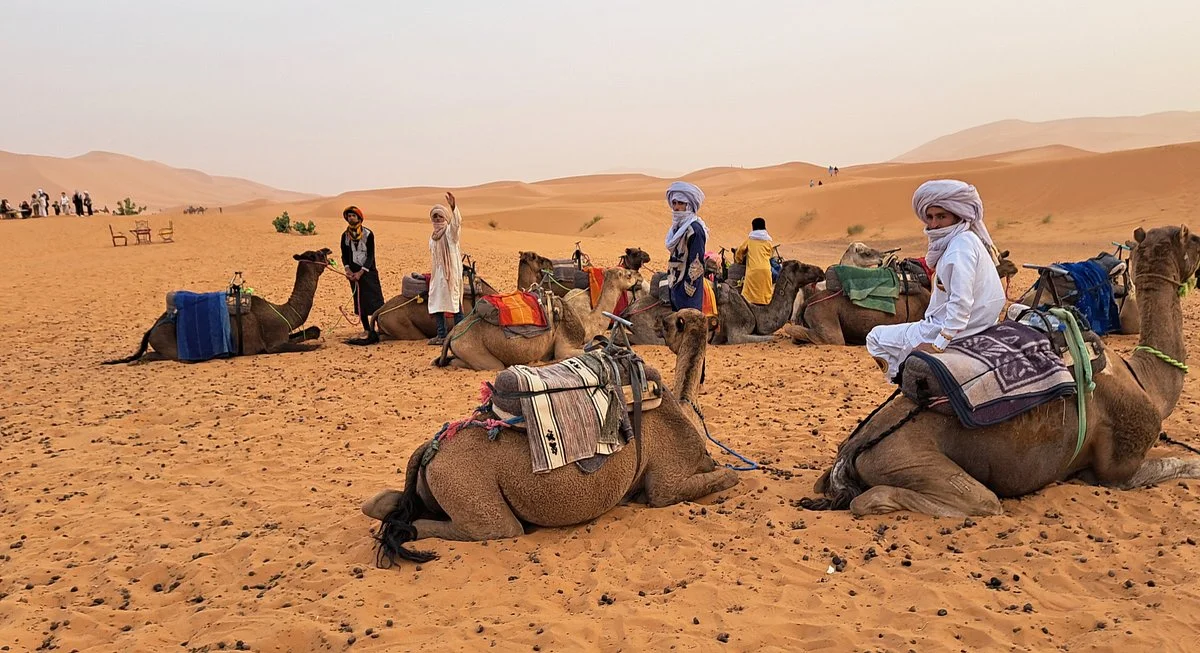
As late afternoon approaches, it’s time for the experience many travelers dream about: camel trekking Merzouga style. Your camel (or dromedary, to be technically correct) will be waiting, often adorned with colorful blankets and traditional saddles.
Mounting a camel is a bit of an adventure itself—these tall creatures kneel down for you to climb on, then lurch forward and backward as they stand up. Hold on tight and lean back! Once you’re up and the caravan begins moving, you’ll quickly settle into the gentle, swaying rhythm that has transported desert travelers for thousands of years.
The camel trek typically lasts between one to two hours, depending on your tour package and the location of your desert camp. As your caravan moves deeper into the Erg Chebbi dunes, the modern world fades away. There are no roads, no buildings, no power lines—just endless sand, sky, and silence broken only by the soft footfalls of the camels and the occasional call of the camel herder.
Crossing the Erg Chebbi Dunes at Sunset
Timing is everything, and most tours are carefully planned so you reach the heart of the dunes just as the sun begins its descent. This is when the Sahara truly comes alive with color. The dunes shift from gold to orange to deep rose and purple, with shadows creating dramatic contrasts between the ridges and valleys of sand.
Many tours pause at a high dune where you can dismount and climb to the top for sunset views. The climb is worth every step—from the peak, you’ll have a 360-degree view of the endless desert, with dune after dune rolling away in every direction. The silence is profound. The beauty is overwhelming. These are the moments that stay with you forever.
Photographers love this time of day, as the changing light creates incredible opportunities for capturing the desert’s magic. But even if you don’t take a single photo, watching a Sahara sunset is an experience that touches something deep in the soul.
Arriving at the Desert Camp
As darkness begins to fall, you’ll remount your camel (or sometimes transfer to a 4×4 if your camp is further away) and continue to your desert camp Morocco accommodation for the night. The camps are typically nestled between dunes, offering some protection from wind while providing stunning views of the surrounding landscape.
Traditional Berber tents await you—spacious canvas structures that stay surprisingly cool in the evening. Inside, you’ll find comfortable beds with thick blankets (desert nights can be quite cold, even when days are hot), colorful carpets, and traditional decorations. Some camps offer private tents with en-suite bathrooms, while others have shared facilities. Luxury camps may include proper beds, electricity, hot showers, and even air conditioning.
Traditional Moroccan Dinner & Local Music
After settling into your tent and perhaps climbing a nearby dune to watch the stars emerge, you’ll be called to dinner. Meals in the desert are typically served in a communal tent where travelers gather around low tables.
The food is hearty and delicious—usually starting with Moroccan salads (a variety of cooked vegetable dishes), followed by a tagine (slow-cooked stew with meat and vegetables), couscous, or another traditional dish. Fresh bread is always abundant, and the meal concludes with seasonal fruit and mint tea.
After dinner, the real magic begins. Your hosts will build a fire, and local musicians often perform traditional Berber music using drums and other instruments. The rhythmic beats echo across the dunes as travelers and guides gather around the fire, clapping, singing, and sometimes dancing under the stars. These spontaneous celebrations embody the warmth and hospitality of Moroccan culture.
Stargazing in the Sahara
Once the music winds down, take some time to simply look up. The Sahara offers some of the clearest, darkest skies on Earth, far from any light pollution. The number of stars visible is absolutely staggering—the Milky Way stretches across the sky like a glowing river, and shooting stars are common.
Many camps provide telescopes or simply encourage you to lie back on the sand and gaze upward. This is a perfect time for quiet reflection, meaningful conversations, or simply absorbing the profound sense of being a small part of an infinite universe.
Sunrise on the Dunes
Your guide will wake you early—usually around 5:30 or 6:00 AM—so you can climb a nearby dune to watch the sunrise. It’s worth dragging yourself out of the warm blankets. Morning in the desert is a completely different experience from evening.
As the sun rises, the dunes transform again, this time from deep purple and blue shadows to soft pastels and then to brilliant gold. The air is crisp and fresh. Birds begin to call. The ripples in the sand, perfectly preserved from yesterday’s wind, create mesmerizing patterns that photographer’s dreams are made of.
After sunrise, you’ll return to camp for a breakfast of Moroccan pancakes, bread, jam, cheese, and mint tea before beginning your return journey—either by camel or 4×4.
4×4 Desert Experiences
Many Merzouga desert tours include or offer optional 4×4 excursions. These adventures take you deeper into the desert to places camels can’t easily reach. You might visit nomadic families still living traditional lives in the desert, explore fossil sites where ancient marine creatures left their mark in rocks that were once ocean floors, or race across flat desert plains surrounded by dunes.
Some tours also include a thrilling ride around the dunes themselves—an exciting, bumpy experience that shows you just how vast and varied the Erg Chebbi landscape really is.
Types of Merzouga Desert Tours
2-Day, 3-Day, and 4-Day Itineraries
Merzouga desert tours come in various lengths to suit different schedules and interests:
2-Day Tours are the minimum option, usually departing from Marrakech or Fes and including one night in the desert. These tours move at a faster pace with fewer stops but still include the essential experiences—camel trekking, desert camp, and sunrise/sunset views. They’re ideal for travelers with limited time who want to prioritize the Sahara experience itself.
3-Day Tours are the most popular option and offer the best balance of journey and destination. These tours include more stops along the route, often visiting Ait Benhaddou, Todra or Dades Gorges, and other significant sites. You’ll spend one night in the desert and one night in a hotel or guesthouse along the route, allowing for a more relaxed pace and deeper exploration.
4-Day Tours provide the most comprehensive experience, with additional time in the desert (sometimes two nights) and more extensive exploration of the regions between the cities and Merzouga. These tours might include visits to the Draa Valley, more time in the gorges, or additional activities in Merzouga itself.
Standard vs. Luxury Desert Camps
Things to expect in Merzouga vary significantly depending on the type of camp you choose:
Standard Camps offer traditional Berber tents with comfortable mattresses, blankets, and pillows. Bathrooms are typically shared and may be simple facilities with bucket showers. These camps are clean and comfortable, providing an authentic experience without unnecessary frills. They’re perfect for adventurous travelers who prioritize experience over amenities.
Luxury Camps elevate the experience with private tents featuring en-suite bathrooms with hot showers, proper beds with quality linens, electricity, and sometimes even air conditioning. The dining areas are more elaborate, meals are more sophisticated, and additional amenities like charging stations and Wi-Fi may be available. Despite the luxury touches, these camps still maintain the authentic desert atmosphere.
Private vs. Group Tours
Group Tours are more economical and provide opportunities to meet fellow travelers from around the world. The groups are typically small (8-15 people) and the shared experience often leads to wonderful connections and friendships.
Private Tours offer complete flexibility in timing, stops, and activities. They’re ideal for families, couples celebrating special occasions, or anyone who wants a customized experience. Private tours cost more but provide undivided attention from your guide and the freedom to adjust plans as you go.
Accommodation in the Sahara
What a Standard Camp Includes
Standard desert camps provide everything you need for a comfortable night under the stars. Your tent will include real beds (not just sleeping bags) with multiple blankets, as temperatures can drop significantly at night. Shared bathroom facilities include toilets and washing areas, with some camps offering basic showers.
The communal dining tent is where meals are served and evening entertainment takes place. Most camps have cushioned seating areas where you can relax with other travelers. While standard camps don’t have electricity in the tents, the staff can usually charge your devices in the communal areas.
What a Luxury Camp Includes
Luxury camps take Sahara accommodation to another level while respecting the desert environment. Private tents are spacious and beautifully decorated with traditional Berber rugs, lanterns, and furnishings. En-suite bathrooms feature proper toilets, sinks, and hot showers with good water pressure.
Many luxury camps have electricity (solar-powered or generators) allowing you to charge devices and providing lighting in your tent. Some offer air conditioning or heating depending on the season. The dining experience is more refined, often featuring multiple courses, and the tents themselves are larger with separate sitting areas.
Food, Comfort, Electricity, and Wi-Fi
Meals at desert camps are typically generous and delicious, featuring traditional Moroccan cuisine. Vegetarian options are always available, and camps can usually accommodate dietary restrictions with advance notice.
Comfort in the desert depends partly on the season and your camp choice. Spring and fall offer the most pleasant temperatures. Winter nights can be very cold but camps provide plenty of blankets. Summer days are extremely hot, making air-conditioned luxury camps more appealing.
Most standard camps don’t have electricity in individual tents, though communal areas may have power for a few hours in the evening. Luxury camps typically offer more consistent power. Wi-Fi in the desert is rare and generally limited—consider this an opportunity to disconnect!
Activities You Can Do in Merzouga
Sandboarding
The tall dunes of Erg Chebbi make excellent natural slopes for sandboarding. Many tours include sandboards, or you can rent them in Merzouga village. It’s similar to snowboarding but on sand, and it’s incredibly fun. The climb back up the dune is the challenging part, but the thrilling ride down makes it worthwhile.
Quad Biking
For adrenaline seekers, quad biking through the desert offers an exciting way to explore. You can rent ATVs in Merzouga and ride across flat desert plains and around the base of the dunes. Sunset quad biking tours are particularly popular, combining adventure with spectacular views.
4×4 Desert Adventures
Beyond the transfer to your camp, many visitors book full-day 4×4 tours that explore the wider desert region. These excursions might include visits to abandoned mining villages, seasonal lakes that attract flamingos, or remote corners of the Erg Chebbi that most tourists never see.
Visit to Khamlia Village (Gnawa Music)
Just a few kilometers from Merzouga lies Khamlia, a small village inhabited by descendants of former slaves from sub-Saharan Africa. The village is famous for its Gnawa music—a hypnotic spiritual music tradition featuring drums, castanets, and the three-stringed sintir.
Visiting Khamlia offers a wonderful cultural experience. You’ll be welcomed with tea and treated to a live Gnawa music performance in someone’s home or a small venue. The music is powerful and deeply rhythmic, often used in spiritual healing ceremonies. Many tours include this stop, or you can arrange it independently.
Fossil Sites & Nomad Families
The desert around Merzouga is rich with fossils from when this area was covered by ocean millions of years ago. Local guides can take you to sites where you’ll see fossilized shells, trilobites, and other ancient marine creatures embedded in rocks.
Some tours also include visits to nomadic Berber families who still live traditional lives in the desert, moving with the seasons and herding goats and sheep. These visits offer profound insights into a lifestyle that has remained largely unchanged for centuries. Families typically welcome visitors with tea and are happy to share stories about their lives.
Best Time to Visit Merzouga
Ideal Seasons
The best time to visit Merzouga depends on your preferences and tolerance for heat:
Spring (March-May) and Fall (September-November) are considered the optimal seasons. Temperatures are comfortable—warm during the day (20-30°C / 68-86°F) and cool at night. The weather is stable with minimal rain. These months also coincide with beautiful wildflowers blooming in the desert after winter rains.
Winter (December-February) offers crisp, clear days and very cold nights (temperatures can drop near freezing). If you don’t mind bundling up at night, winter provides stunning clear skies for stargazing and fewer tourists. Daytime temperatures are pleasant for activities.
Summer (June-August) brings extreme heat, with daytime temperatures often exceeding 40-45°C (104-113°F). However, many camps close or significantly reduce prices. If you can handle the heat and stay well-hydrated, you’ll have the desert almost to yourself. Activities are best done early morning or evening.
Weather Conditions
The Sahara climate is characterized by dramatic temperature swings between day and night. Even in spring and fall, it’s common for temperatures to vary by 20-30 degrees between afternoon and midnight.
Rain is rare but can occur, particularly in late fall and winter. When it does rain, it can be spectacular—temporary waterfalls appear in the wadis (dry riverbeds) and the desert briefly transforms with greenery.
Wind is a regular feature of desert life. Sandstorms are relatively rare but possible. Your guides will know how to handle any weather conditions safely.
Avoiding Extreme Heat
If you visit during hot months (May-September), follow these precautions:
- Start activities very early morning or late afternoon
- Drink water constantly, even if you don’t feel thirsty
- Wear light, loose, breathable clothing that covers your skin
- Use high-SPF sunscreen and reapply frequently
- Wear a hat and sunglasses always
- Listen to your body and rest in shade when needed
What to Pack for Your Desert Trip
Clothing
Layering is essential for the desert’s temperature fluctuations:
For daytime:
- Light, long-sleeved shirts and long pants (protects from sun and sand)
- Breathable fabrics like cotton or linen
- Light colors that reflect heat
- One warm layer for cold mornings
For nighttime:
- Warm fleece or jacket
- Long pants
- Warm socks
- Extra layers in winter months
General items:
- Comfortable walking shoes (closed-toe for camel riding)
- Sandals for camp
- Scarf or shawl (protects from sun, sand, and cold)
- Hat with brim for sun protection
- Sunglasses with UV protection
Shoes
Closed-toe shoes are essential for camel riding and desert walking—sand gets very hot and contains rocks and thorns. Athletic shoes or hiking boots work well. Bring sandals for wearing around camp in the evening.
Essential Items
- Sunscreen: High SPF, applied generously and often
- Lip balm: With SPF, as lips burn easily
- Flashlight or headlamp: Essential for navigating at night
- Camera: With extra batteries and memory cards
- Power bank: For charging devices as electricity is limited
- Small backpack: For carrying essentials during activities
- Wet wipes: Very useful when shower facilities are basic
- Toilet paper: Not always provided, especially in basic camps
- Hand sanitizer: Important for hygiene
- Personal medications: Including any motion sickness remedies if you’re sensitive
- Small amount of cash: For tips and buying souvenirs
- Reusable water bottle: Stay hydrated constantly
Optional but recommended:
- Lightweight sleeping bag liner for extra warmth or hygiene comfort
- Earplugs if you’re a light sleeper
- Small towel (some camps don’t provide them)
- Notebook or journal for recording your experiences
Safety and Travel Tips
Health & Heat Safety
The desert environment requires some special health considerations:
Hydration is critical. Drink water constantly throughout the day, even if you don’t feel thirsty. Dehydration happens quickly in dry desert air. Aim for at least 3-4 liters per day when active.
Protect yourself from the sun. Sunburn happens fast at this altitude and with the sun’s reflection off sand. Cover up, use sunscreen generously, and seek shade during peak heat hours.
Watch for heat exhaustion symptoms: dizziness, nausea, excessive sweating, weakness. If you experience these, get to shade immediately, drink water, and cool down with wet cloths.
Food safety: Reputable tour companies prepare food hygienically. Avoid eating raw vegetables unless you’re sure they’ve been washed in clean water. Cooked foods are generally safe.
Camel Ride Tips
Camel riding is generally safe and most people find it easier than expected:
- Hold onto the saddle horn firmly, especially when the camel stands up and sits down
- Lean back when the camel stands up, forward when it sits
- Relax into the swaying motion rather than fighting it
- If you feel uncomfortable, let your guide know—they can adjust your position or provide additional support
- Wear long pants to prevent chafing
- Don’t worry if your camel makes loud groaning sounds—this is normal!
If you have back problems, knee issues, or mobility concerns, discuss this with your tour operator in advance. Some camps can be reached by 4×4 instead of camel.
Booking a Reliable Tour
Choosing a reputable tour operator ensures a safe, enjoyable experience:
Look for:
- Established companies with good reviews on multiple platforms
- Clear itineraries and pricing with no hidden costs
- Professional website and communication
- Transparent policies about group sizes, accommodations, and inclusions
- Insurance and licensed guides
- Environmental responsibility practices
Ask about:
- Exact camp location and facilities
- Vehicle type and condition
- Driver and guide qualifications
- Food provision and dietary accommodations
- What’s included vs. what costs extra
- Cancellation policies
Red flags:
- Prices significantly lower than competitors (usually means lower quality or hidden costs)
- Pushy sales tactics or pressure to book immediately
- Vague answers about accommodations or itinerary
- No reviews or only very recent reviews
- Requests for full payment before the tour
Tips for booking:
- Book directly when possible rather than through multiple intermediaries
- Get everything in writing
- Read recent reviews carefully
- Confirm all details a few days before departure
- Tip your guides and drivers if they provide good service (recommended but not mandatory)
Conclusion: Why Merzouga is the Top Sahara Experience in Morocco
Among all the Sahara desert tour Morocco destinations, Merzouga stands out as the most accessible, spectacular, and well-equipped for visitors. The Erg Chebbi dunes offer the classic Sahara experience that travelers dream about—towering golden dunes, camel caravans, starlit camps, and horizons that stretch forever.
What makes Merzouga desert tours truly special isn’t just the stunning landscape, though the dunes are undeniably magnificent. It’s the combination of natural beauty, cultural authenticity, and the profound sense of stepping outside normal life into something ancient and timeless.
The journey to Merzouga transforms you. The landscapes you traverse—mountains, valleys, gorges, and plains—show you Morocco’s incredible diversity. The people you meet—guides, hosts, musicians, and fellow travelers—enrich your understanding of this remarkable country. The night you spend in the desert, whether in a simple tent or a luxury camp, connects you to something primal and peaceful that’s increasingly rare in our modern world.
Whether you choose a quick 2-day adventure or a leisurely 4-day exploration, whether you prefer standard camps or luxury accommodations, the essence of the experience remains the same: the vast silence of the dunes, the impossible number of stars overhead, the gentle sway of a camel beneath you, and the warm hospitality of the Berber people who call this challenging environment home.
A Merzouga desert trip isn’t just a tour—it’s a journey into one of Earth’s most extraordinary landscapes and an encounter with a way of life that has endured for millennia. It’s watching the play of light and shadow transform the dunes throughout the day. It’s the taste of mint tea shared with strangers who become friends. It’s the profound silence broken only by wind across sand. It’s waking to a sunrise that paints the world in colors you didn’t know existed.
The Sahara has drawn explorers, poets, and dreamers for centuries. Now it’s your turn. Pack your sense of adventure, bring your camera, prepare for temperatures that swing from hot to cold, and get ready for an experience that will stay with you for the rest of your life.
The dunes are waiting. Your camel is ready. The stars are preparing their nightly show. Merzouga is calling—will you answer?
Frequently Asked Questions About Merzouga Desert Tours
How long should I spend in Merzouga? Most travelers book 2-3 day tours that include one night in the desert. This provides enough time to enjoy the journey, experience camel trekking, watch both sunset and sunrise, and participate in evening activities. If you have more time, 3-4 day tours allow for a more relaxed pace and additional activities.
Is Merzouga suitable for families with children? Absolutely! Many families visit Merzouga with children. Kids typically love camel riding, sandboarding, and sleeping in desert tents. However, consider the journey length (long drives may be challenging for very young children) and the physical requirements. Discuss any special needs with your tour operator.
Do I need to book a tour in advance? During peak seasons (March-May and September-November), booking in advance is highly recommended to ensure availability and get better prices. During summer, last-minute booking is easier, though advance planning still gives you more options.
Can I visit Merzouga independently without a tour? Yes, you can reach Merzouga by bus or rental car and arrange desert activities locally. However, most travelers find organized tours more convenient and often more economical, as they include transportation, accommodation, meals, and guides who know the region intimately.
Are Merzouga desert tours safe? Yes, tours operated by reputable companies are very safe. Tour operators are experienced in desert conditions, know the routes well, and take appropriate precautions. Follow your guide’s instructions, stay hydrated, and protect yourself from the sun.
What if I have mobility issues? If you have difficulty with camel riding, many camps can be reached by 4×4 vehicle instead. Discuss your needs with tour operators when booking—most are happy to accommodate special requirements.
Is there phone signal or internet in the desert? Phone signal is available in Merzouga village but not in most desert camps. Some luxury camps offer limited Wi-Fi. Most travelers appreciate the opportunity to disconnect, but if connectivity is essential, confirm options with your tour operator.
What currency should I bring? Bring Moroccan Dirhams (MAD) for tips, souvenirs, and any optional activities. Some places accept euros, but you’ll get better value with local currency. ATMs are available in larger towns along the route before reaching Merzouga.
How cold does it get at night? Night temperatures vary by season. Winter nights can drop near freezing (0-5°C / 32-41°F). Spring and fall nights are cool (10-15°C / 50-59°F). Even summer nights can be surprisingly cool compared to daytime heat. Camps provide blankets, but bring warm layers.
Can I see the Milky Way in Merzouga? Yes! The Sahara offers some of the clearest, darkest skies on Earth. On clear nights, the Milky Way is spectacularly visible, along with countless stars and frequent shooting stars. New moon periods provide the darkest skies for optimal stargazing.